Brotkrümelnavigation:
Main content:
ZaC
Future on Campus – Zukunft am Campus (ZaC)
Interactive stations invite visitors to think, explore, tell stories and dream about the future in all its diversity. Every interaction is a co-creative contribution to the further development of the exhibition in the real-world laboratory – and active ‘doing future’ (Assmann, 2022).
ZaC is an interactive exhibition format that
- stimulates futures thinking,
- contributes to implementing futures literacy in teacher training,
- and, as an informal learning space, turns viewers into researchers
- who participate in the development of the interactive exhibition format.
Futures literacy opens up spaces for thinking, exploring, narrating and dreaming about the future in all its diversity of possibilities – to promote imagination, strengthen anticipation and encourage participation. ZaC creates such a space of possibility for futures thinking at the interface of art, science, and education. As an open space, ZaC on PH NOE's campus Baden invites representation, narration and interaction of ideas, projects and utopias; it is a space for images, stories, questions, thoughts, positions, games, statements, and perceptions.
ZaC is being developed as part of the research and development project ‘Learning the Future, Teaching Futures (ZL2)’ of the UNESCO Chair at the PH NÖ, funded by the Government of Lower Austria.
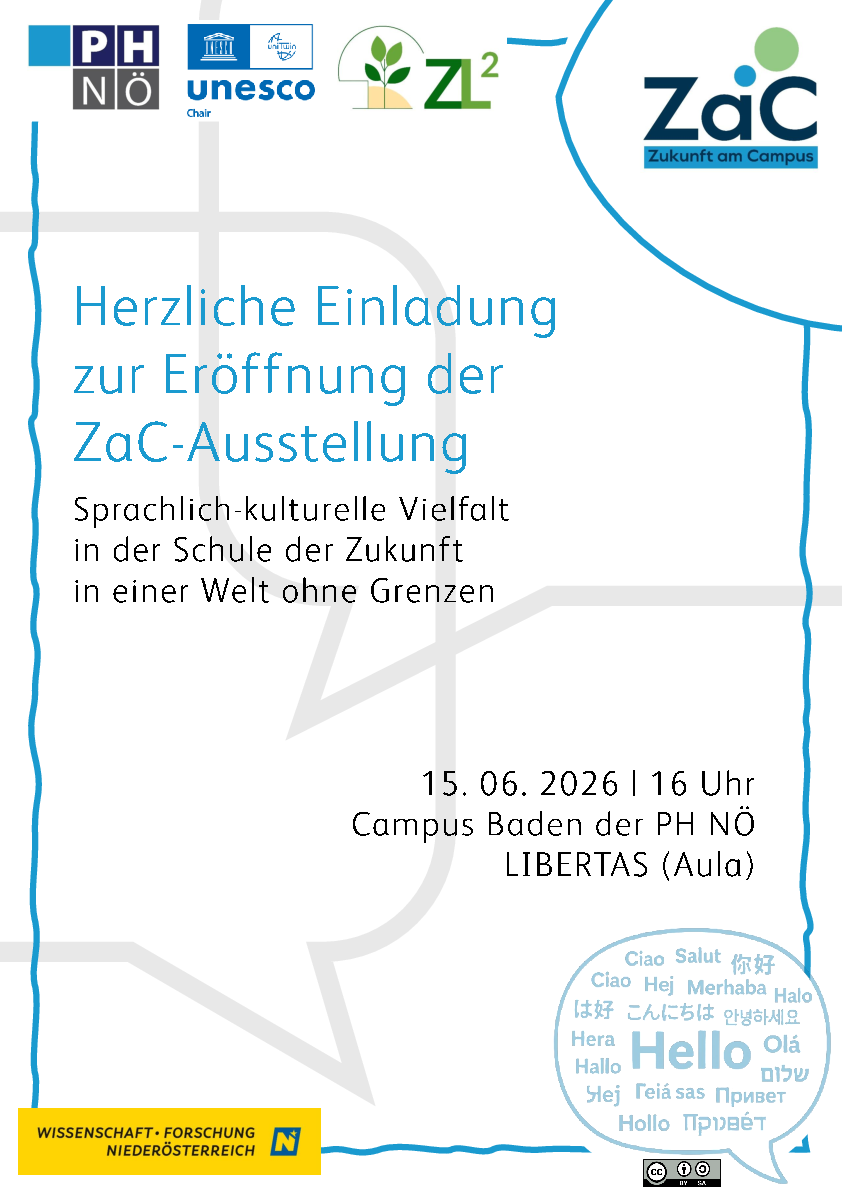
On 15 June 2026, the second interactive ZaC exhibition will open: Linguistic Diversity in a World Without Borders
Five interactive stations invite visitors to think, explore, share stories and dream about the future amidst a wealth of possibilities:
- A Glimpse into a Future Without Borders
- Language Quiz
- Multilingualism in the Classroom of the Future
- Where Does the Journey Go From Here?
- Wishes for a School Without Borders
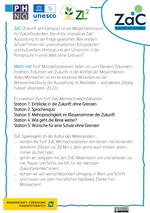
ZaC-Stations
The exhibition consists of 5 interactive stations, plus an intro station and a feedback & reflection station.
Station 0: Introduction ZaC exhibition: “Linguistic Diversity in a world without borders”
This station explains the other 5 interactive stations and the ZaC game rules:
ZaC Game Rules: In the spirit of togetherness …
- the five ZaC interactive stations are best completed one after another (duration: approximately. 20 minutes), but you are welcome to try them individually whenever you have time;
- we treat all ZaC materials with care and leave them – including paper and pens – on site for the next future-thinkers;
- we mind respectful communication, both spoken and written;
- and we appreciate friendly feedback. Thank you for taking part!
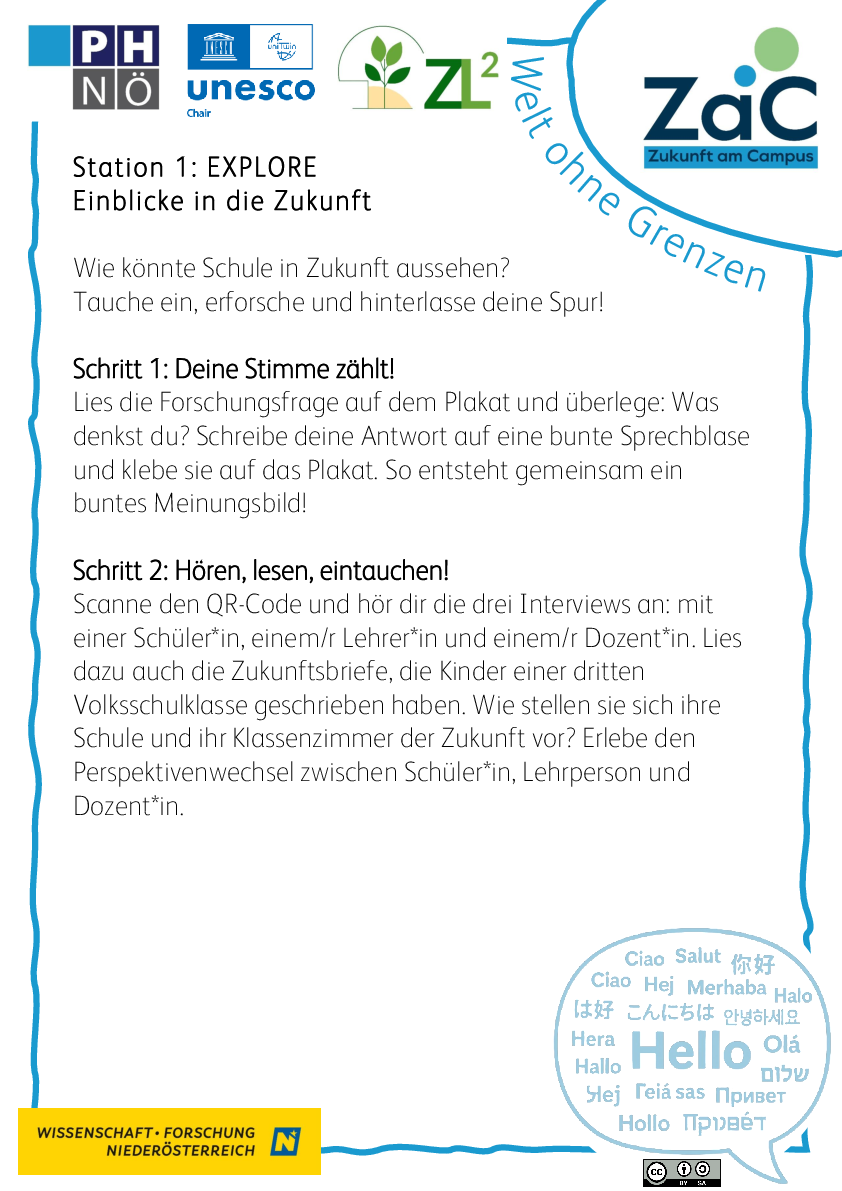
Station 1: Insights into the Future
What might school look like in a world without borders? This station invites visitors to explore different perspectives on the future of education and to share their own ideas. To begin with, participants engage with a research question and contribute their thoughts to a collective discussion. They then delve into the visions of the future held by various stakeholders: Through interviews with students, teachers, and university professors, as well as letters to the future written by children, they gain insights into different expectations, hopes, and visions for the school of tomorrow. An interactive world map highlights the diversity of the visitors. Places of origin, languages, and personal contributions demonstrate how learning is enriched by diverse cultural experiences and how varied perspectives on education can be. Finally, a 3D-printed model of a future classroom encourages participants to further develop their own ideas. Visitors develop proposals for a school and a world without borders and leave behind their visions for future generations.
Connection to Futures Literacy
This station specifically promotes the competency areas of exploring, self-development in, and participation in POLY-futures. Participants engage with different visions of the future, reflect on their own assumptions about education and society, and broaden their perspective on possible futures. Through the exchange of different perspectives, it becomes clear that the future is open and can be actively shaped.
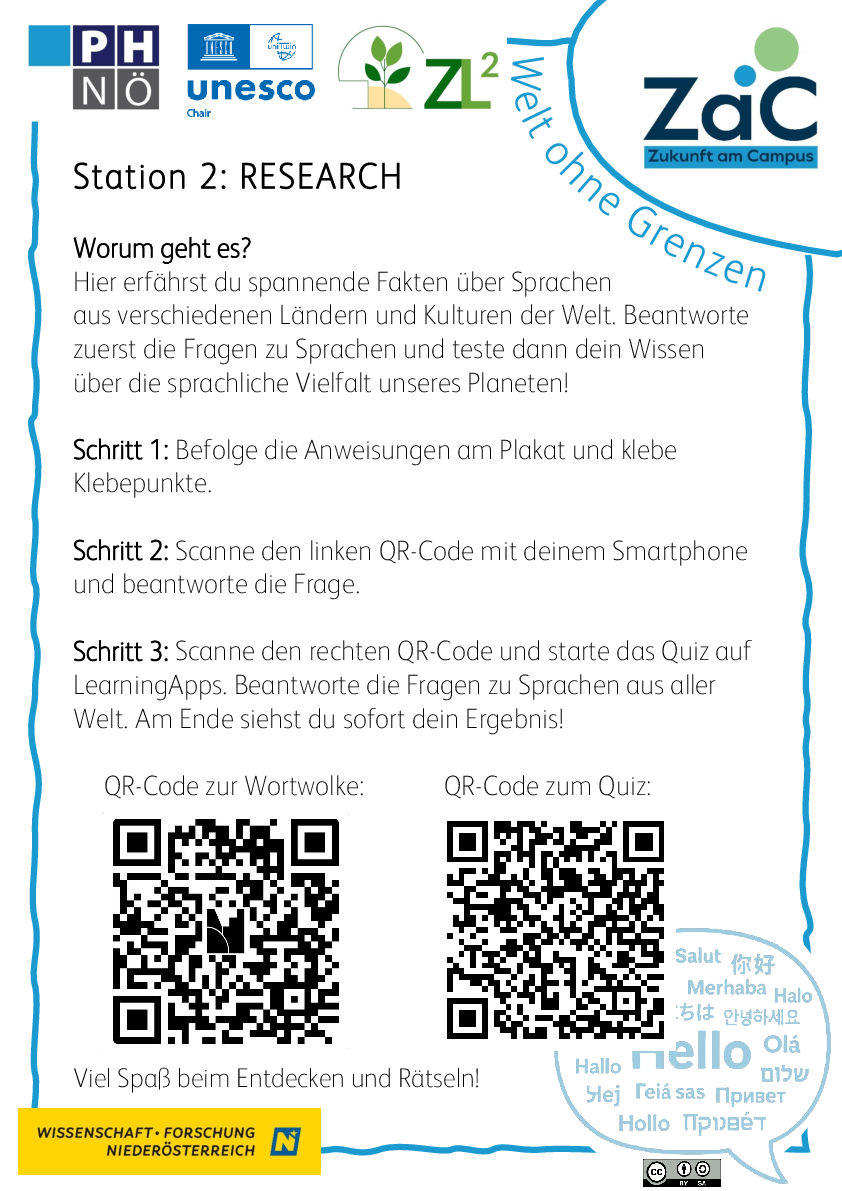
Station 2: Discovering Linguistic Diversity
Language connects people, cultures, and ways of life. At this station, visitors embark on a journey of discovery through the linguistic diversity of our world and explore the significance of multilingualism for living together in a globalized society. To begin, participants reflect on their own experiences with languages and contribute to a collective data collection. They can then expand their knowledge through digital resources: An interactive word cloud visualizes the linguistic diversity of the visitors, while a quiz shares fascinating facts about languages from different countries and cultures. The station invites visitors to become curious, gain new perspectives, and discover the importance of language as a bridge between people. At the same time, it becomes clear that linguistic diversity is a valuable resource for learning, exchange, and social coexistence.
Connection to Futures Literacy
The station particularly promotes the competency areas of exploring and participating in POLY futures. Participants engage with different linguistic and cultural perspectives, expand their knowledge of global diversity, and reflect on the importance of language for understanding, belonging, and social participation. In doing so, they develop a deeper understanding of the complexity and interconnectedness
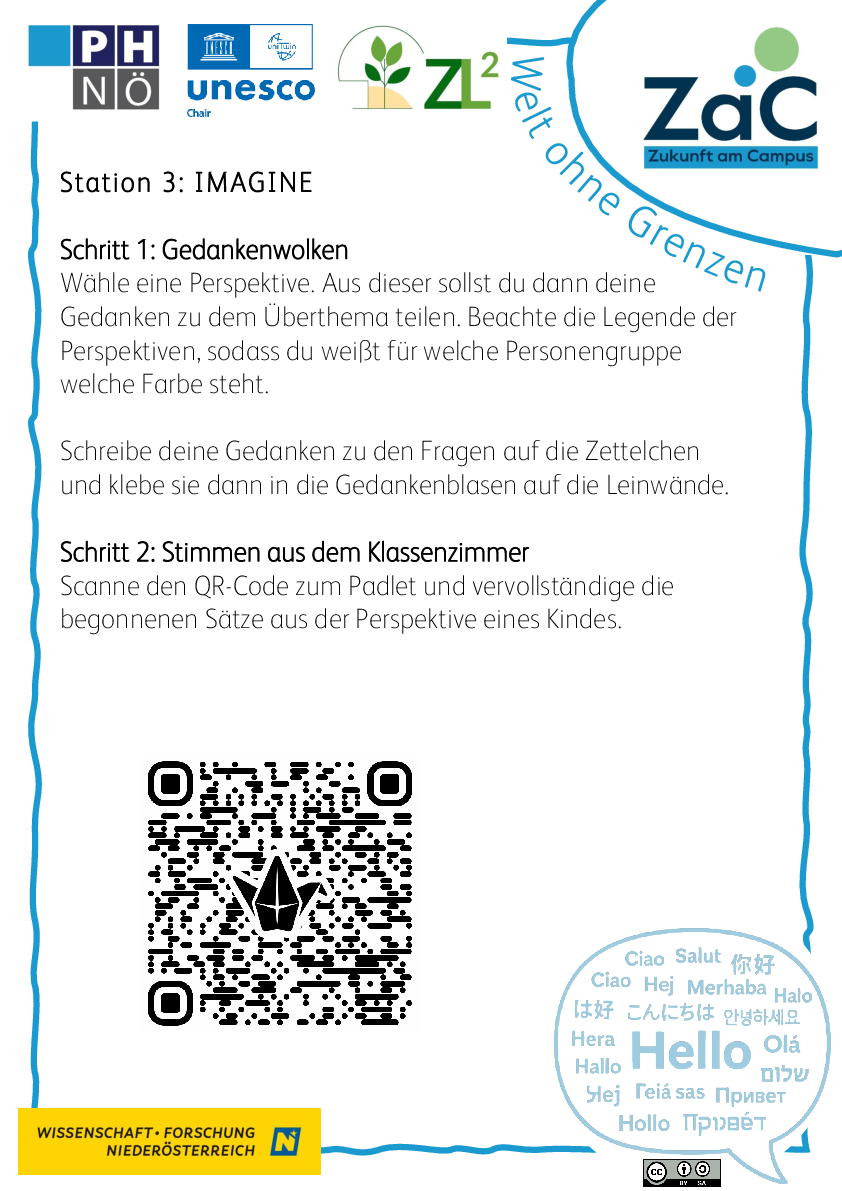
Station 3: Changing Perspectives, Shaping the Future
What does a school without borders look like—viewed from different angles? This station invites visitors to step into different roles and explore the future from various perspectives. In the first part, participants choose a specific perspective and engage with questions surrounding the theme of “school without borders.” Their thoughts, ideas, and wishes are recorded on colored sticky notes and added to shared mind maps. This creates a multifaceted picture of possible futures and diverse needs. In the second part, the focus shifts to the voices of children. Using a digital Padlet, visitors complete sentence starters from a child’s perspective and reflect on how young people might experience school, learning, and living together in the future. The station highlights that the future does not emerge from a single viewpoint, but rather through the interplay of diverse experiences, expectations, and hopes.
Connection to Futures Literacy
This station specifically promotes the skill areas of exploring, participating in, and self-development within POLY-futures. Participants learn to adopt different perspectives, question their own assumptions, and imagine alternative future possibilities. By shifting their perspectives, they develop empathy for other viewpoints and broaden their understanding of the diversity of possible futures.
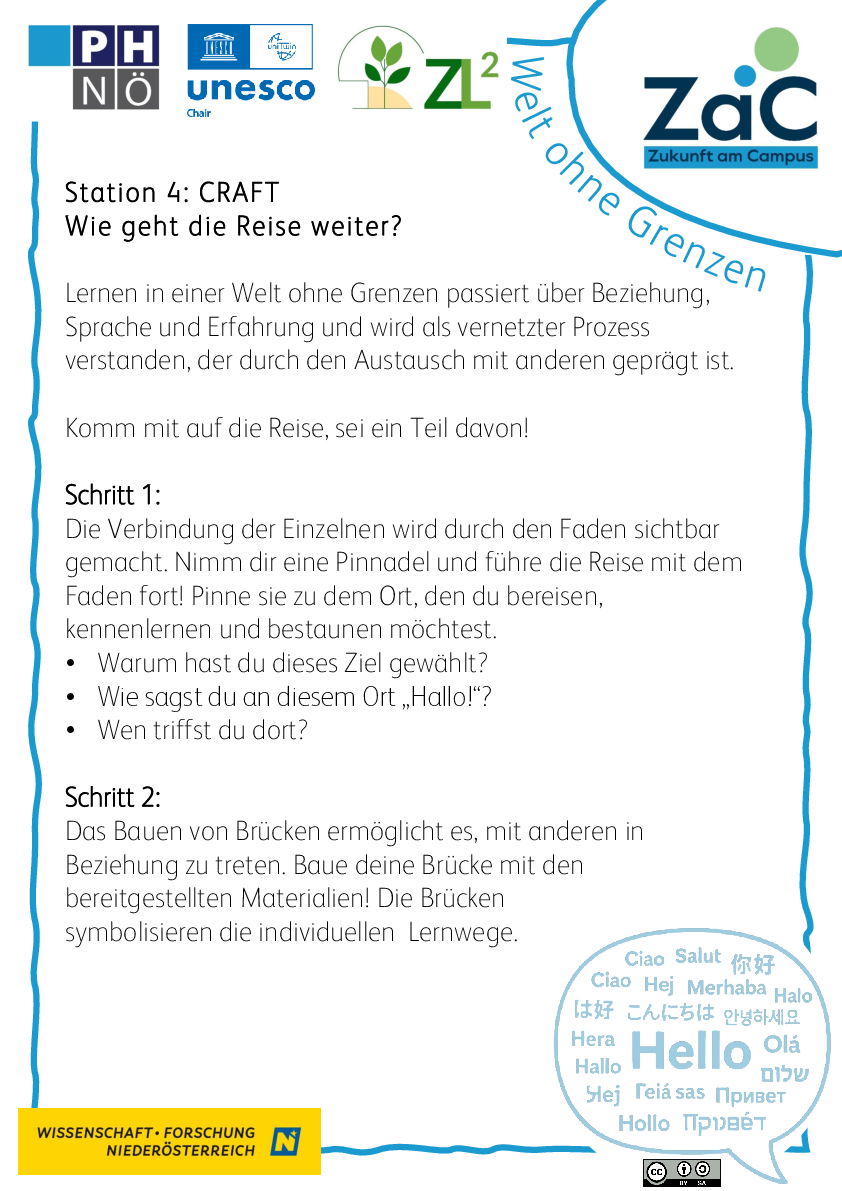
Station 4: Where does the journey go from here?
Learning knows no bounds. It arises from encounters, shared experiences, and interactions with others. At this station, visitors explore the diversity of learning paths and relationships in an interconnected world. Using a shared travel map, participants select a place they would like to visit or explore. Using a thread, they create their personal connection to this place and reflect on the people, languages, and experiences they might encounter there. The resulting thread landscape shows how individual interests and perspectives shape a global network of learning. In the second part, visitors design their own bridges using various materials. These bridges symbolize paths of cooperation, exchange, and shared learning. Each bridge is unique and illustrates that education grows through relationships and fosters new connections between people, cultures, and ideas.
Connection to Futures Literacy
This station particularly promotes the competency areas of participation in, shaping of, and shared responsibility for POLY-futures. Participants explore different perspectives, recognize the importance of relationships and collaboration for shaping the future, and develop ideas about how connections between people, cultures, and living environments can be created. The creative bridge-building activity invites participants to understand the future as a collaborative process of shaping.
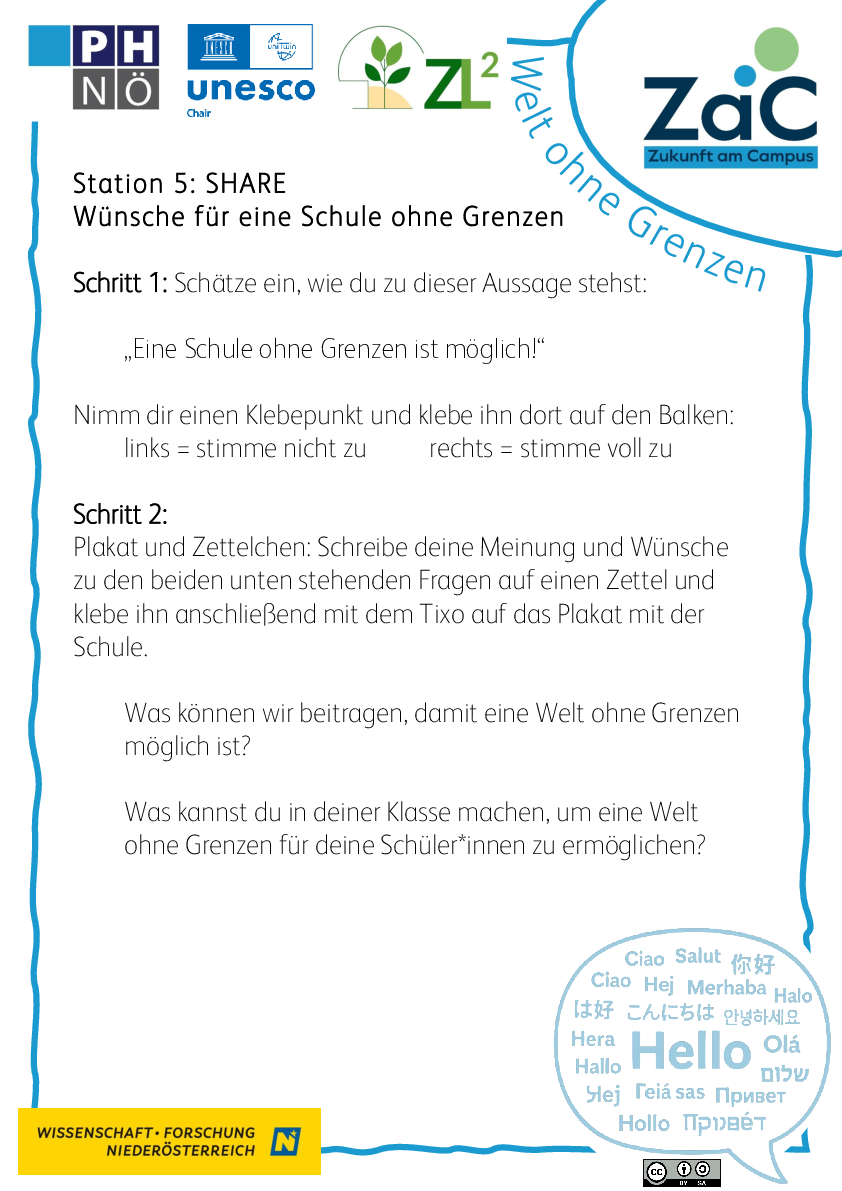
Station 5: Hopes for a School Without Borders
How can we help shape a more just and open future today? At this station, visitors are invited to share their thoughts, hopes, and ideas for a “school without borders.” First, they place themselves on a scale in response to the statement “A school without borders is possible!” thereby highlighting different perspectives. Next, participants collect their wishes and suggestions on a shared poster for the future. They reflect on what each individual can contribute to a world without borders and how school can become a place where diversity, participation, and mutual understanding are lived out. The station creates space for dialogue, shared responsibility, and the development of concrete ideas for the future.
Connection to Futures Literacy
This station particularly promotes the competency areas of shared responsibility and participation in POLY futures. Participants explore their own visions of the future, develop an awareness of the impact of current actions on future generations, and formulate concrete courses of action for a more just and inclusive future. At the same time, the station strengthens diversity of perspectives, democratic participation, and the ability to collectively shape desirable futures.
Station 6: Feedback & Reflection
At this station, we are collecting feedback on the exhibition. Visitors are invited to share their impressions, thoughts and suggestions for improvement. The feedback will be used to further develop the exhibition and improve future editions.
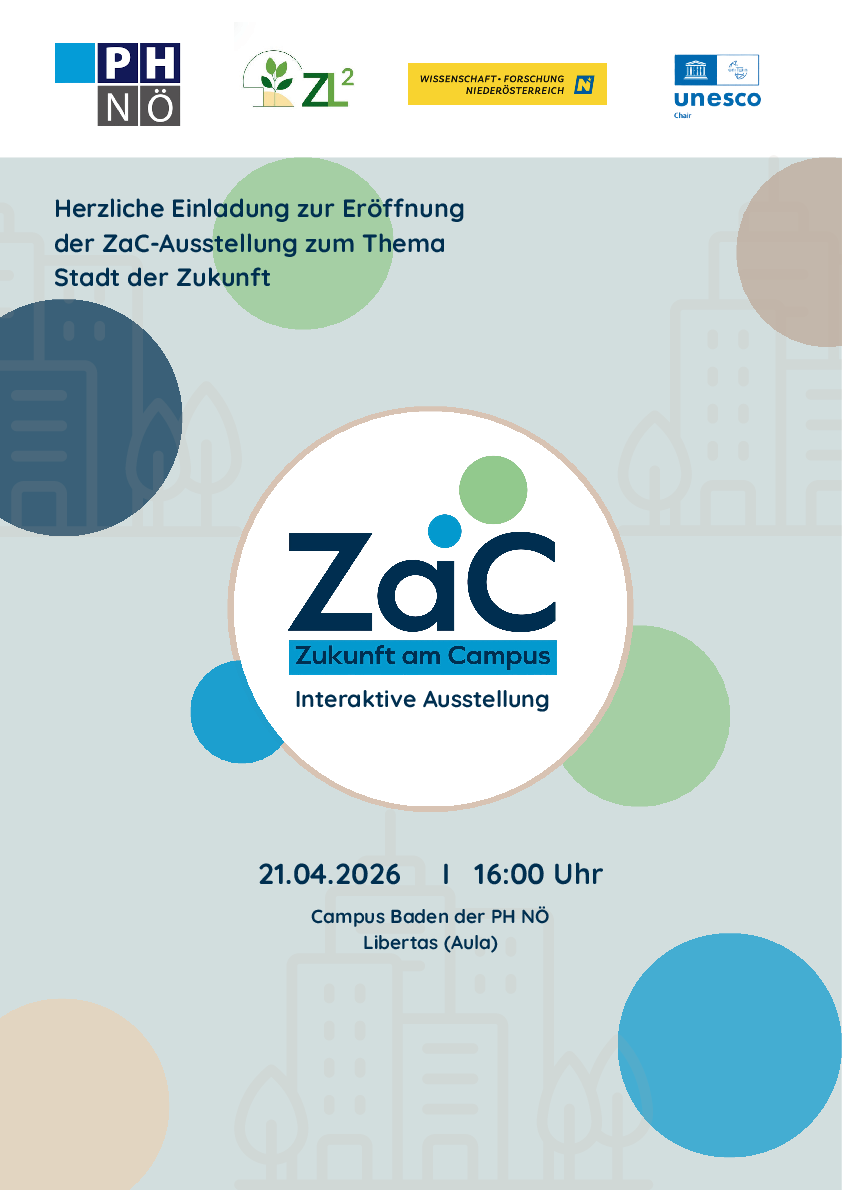
On 21 April 2026, the second interactive ZaC exhibition will open: City of the Future
Five interactive stations invite visitors to think, explore, share stories and dream about the future amidst a wealth of possibilities:
- A journey of the mind to the City of the Future
- Quiz questions on the theme of the city
- Envisioning a city of the future, either alone or together
- Hands-on design of the City of the Future
- Opinions on and wishes for the future

ZaC-Stations
The exhibition consists of 5 interactive stations, plus an intro station and a feedback & reflection station.
Station 0: Introduction ZaC exhibition: „What is the future?“
This station explains the other 5 interactive stations and the ZaC game rules:
ZaC Game Rules: In the spirit of togetherness …
- the five ZaC interactive stations are best completed one after another (duration: approximately. 20 minutes), but you are welcome to try them individually whenever you have time;
- we treat all ZaC materials with care and leave them – including paper and pens – on site for the next future-thinkers;
- we mind respectful communication, both spoken and written;
- and we appreciate friendly feedback. Thank you for taking part!
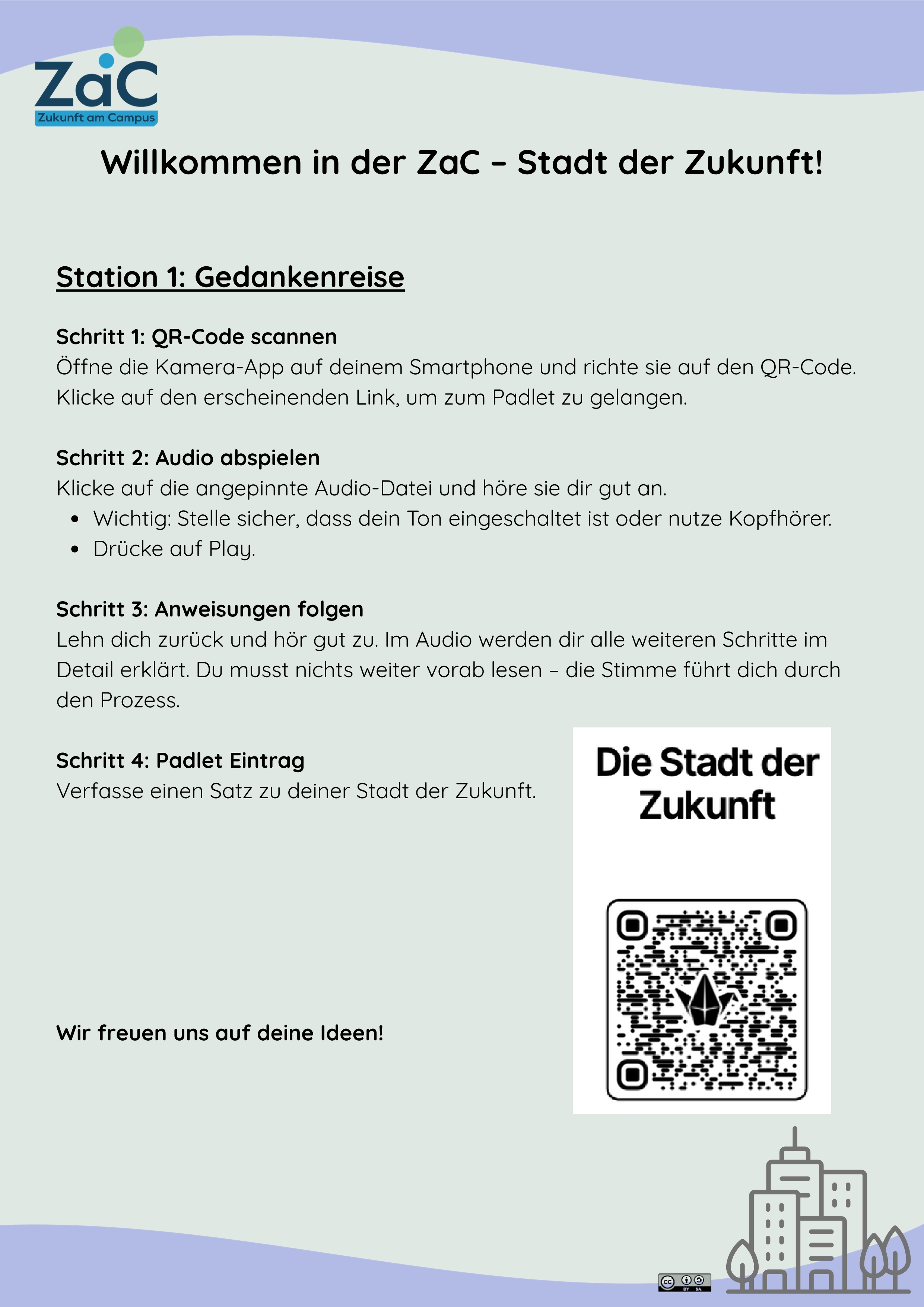
Station 1: A mental journey to the city of the future
Upon entering the exhibition, visitors first scan a QR code and listen to an audio file about the city of the future. They then write a short Padlet post, setting down their initial thoughts on the topic.
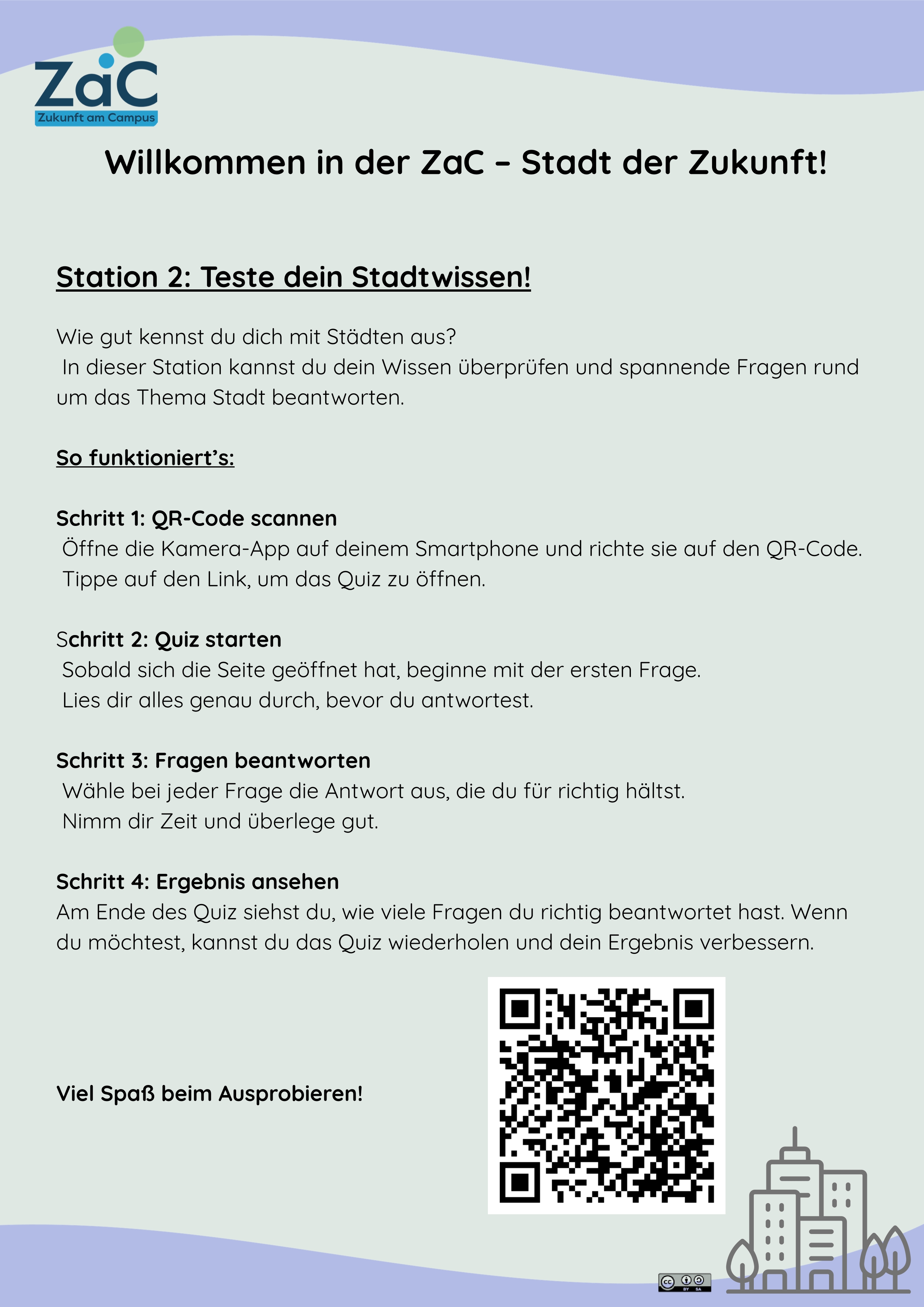
Station 2: Quiz questions on the topic of cities
Here, visitors can test their knowledge of cities. They can choose between a quiz for city beginners or one for city experts and take it.
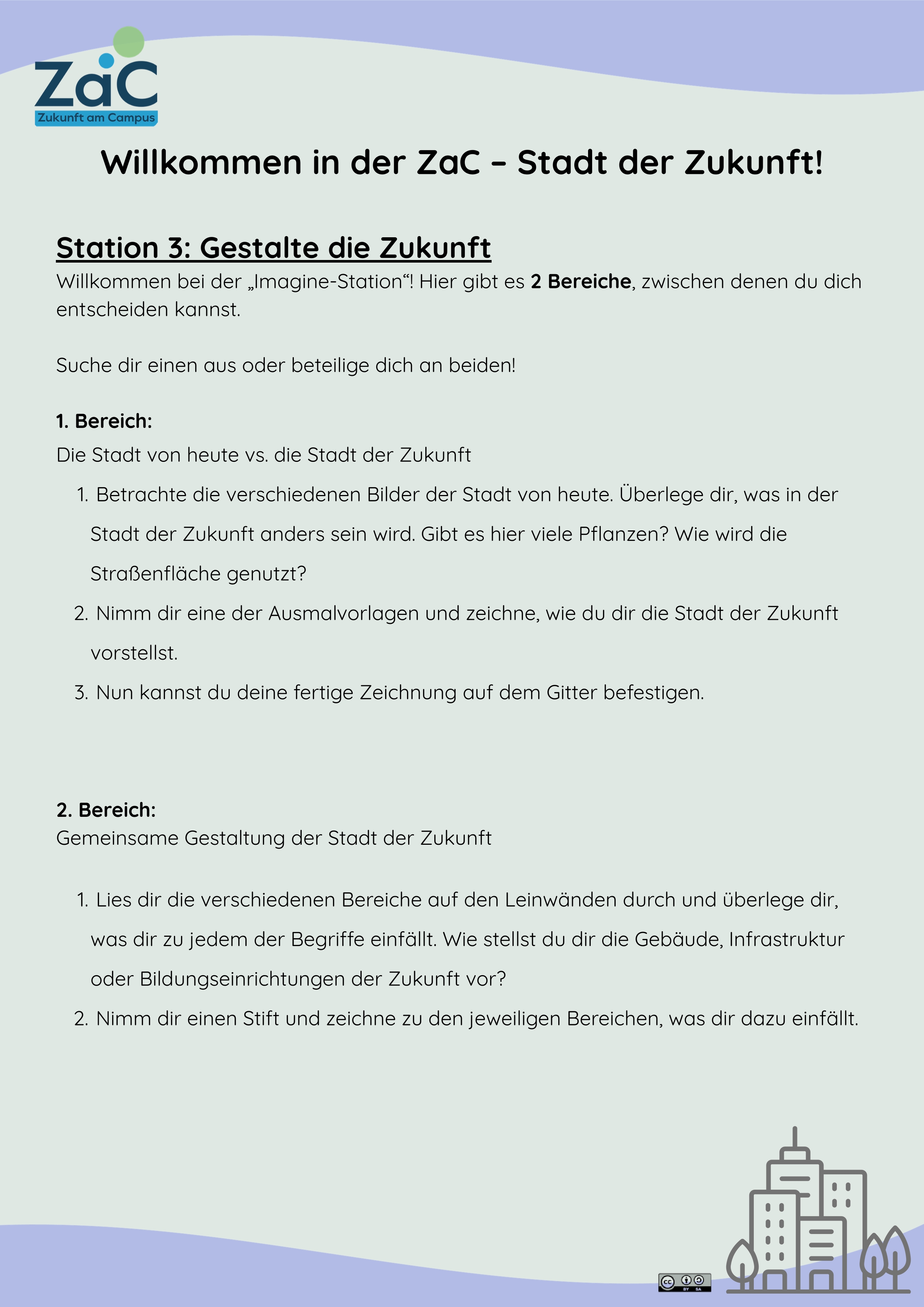
Station 3: Imagining a city of the future, on your own or with others
Here, visitors to the exhibition can use images of cities and their own ideas to imagine the city of the future. They can create their own proposals or build on existing ideas.
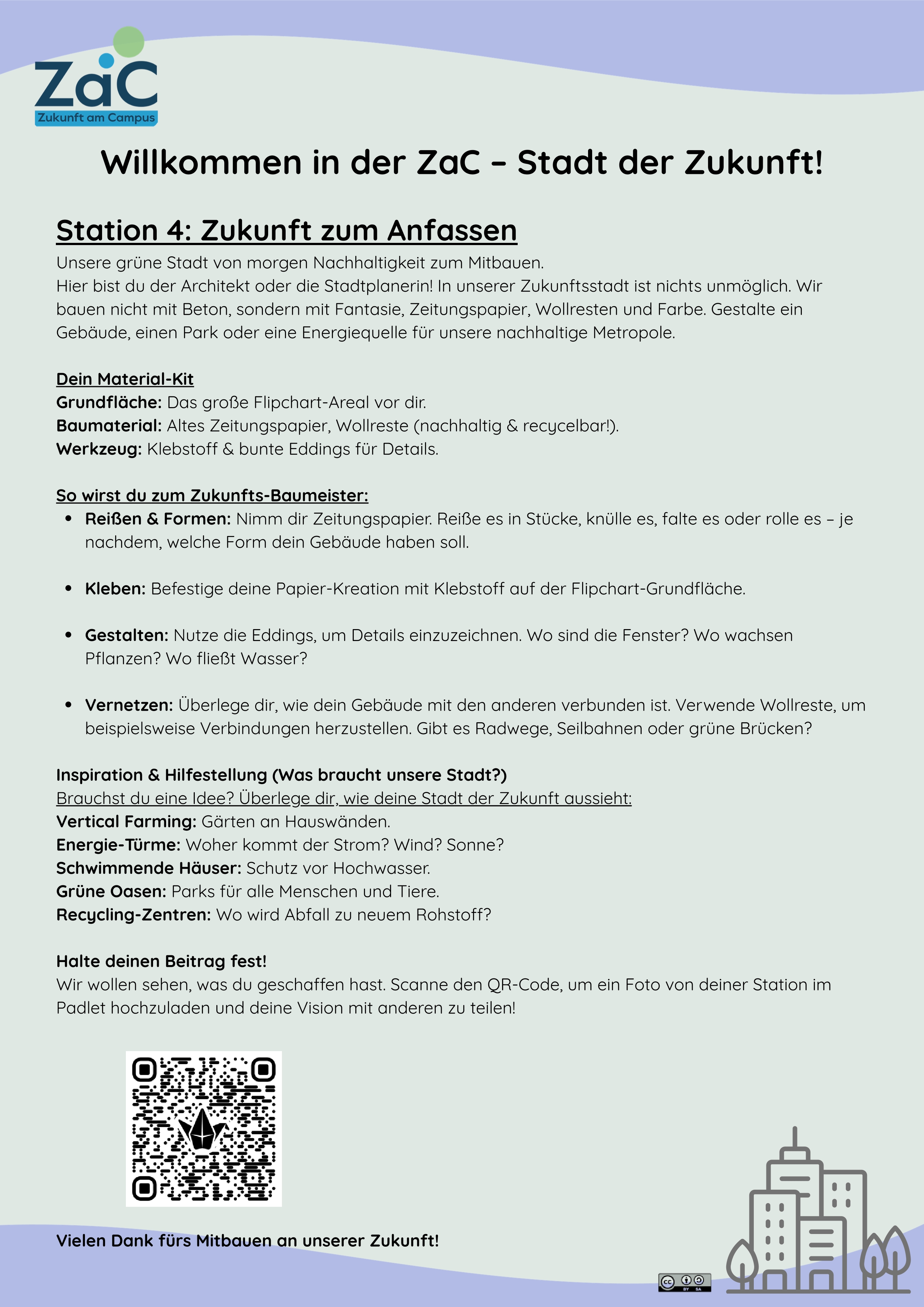
Station 4: Designing a hands-on city of the future
Using a variety of materials such as leftover wool or paper, participants can get creative and design a hands-on city of the future.
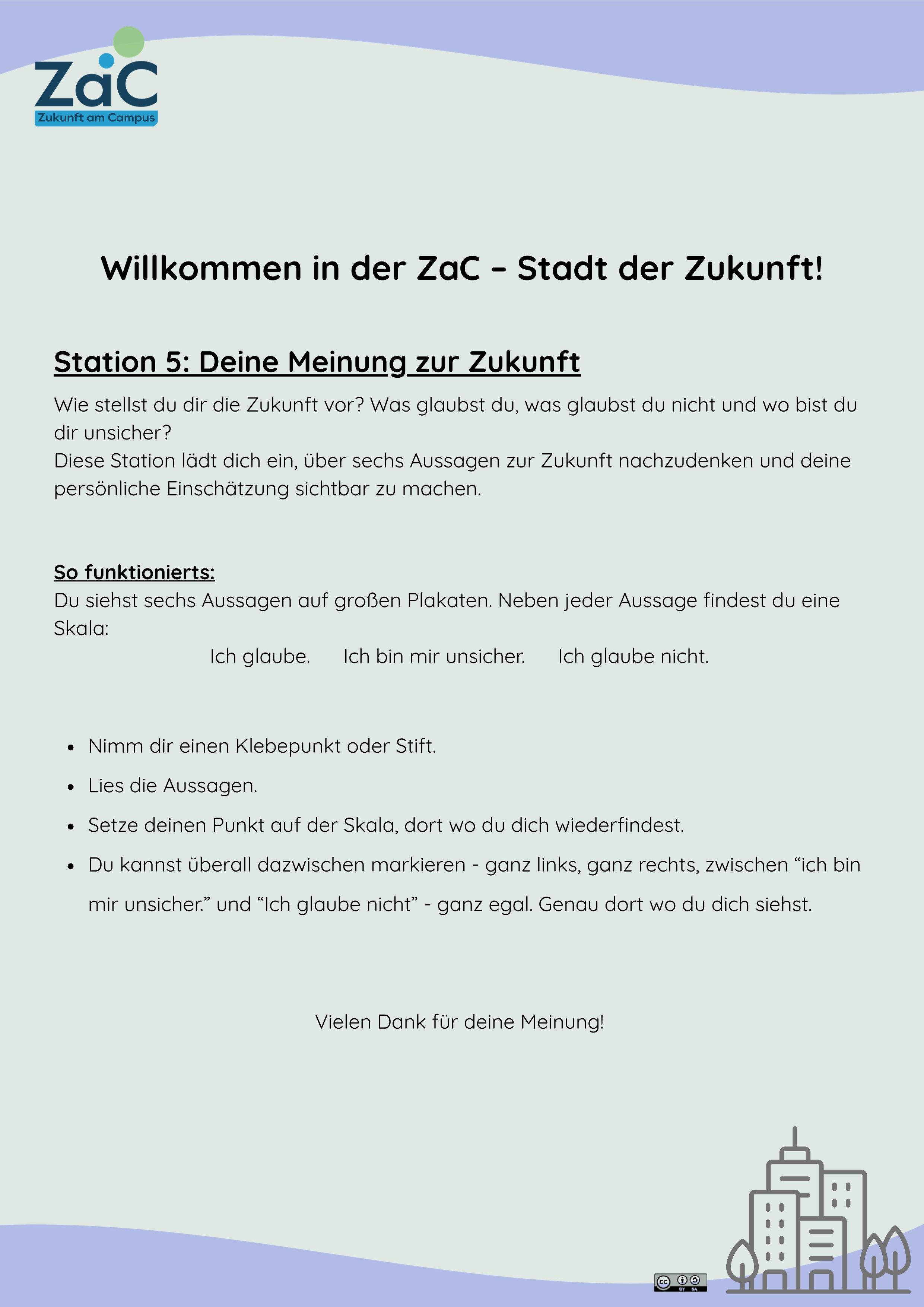
Station 5: Views on and hopes for the future
The final station on the City of the Future explores ideas on this theme. Visitors share their views on how cities might develop in the future.
Station 6: Feedback & Reflection
At this station, we are collecting feedback on the exhibition. Visitors are invited to share their impressions, thoughts and suggestions for improvement. The feedback will be used to further develop the exhibition and improve future editions.
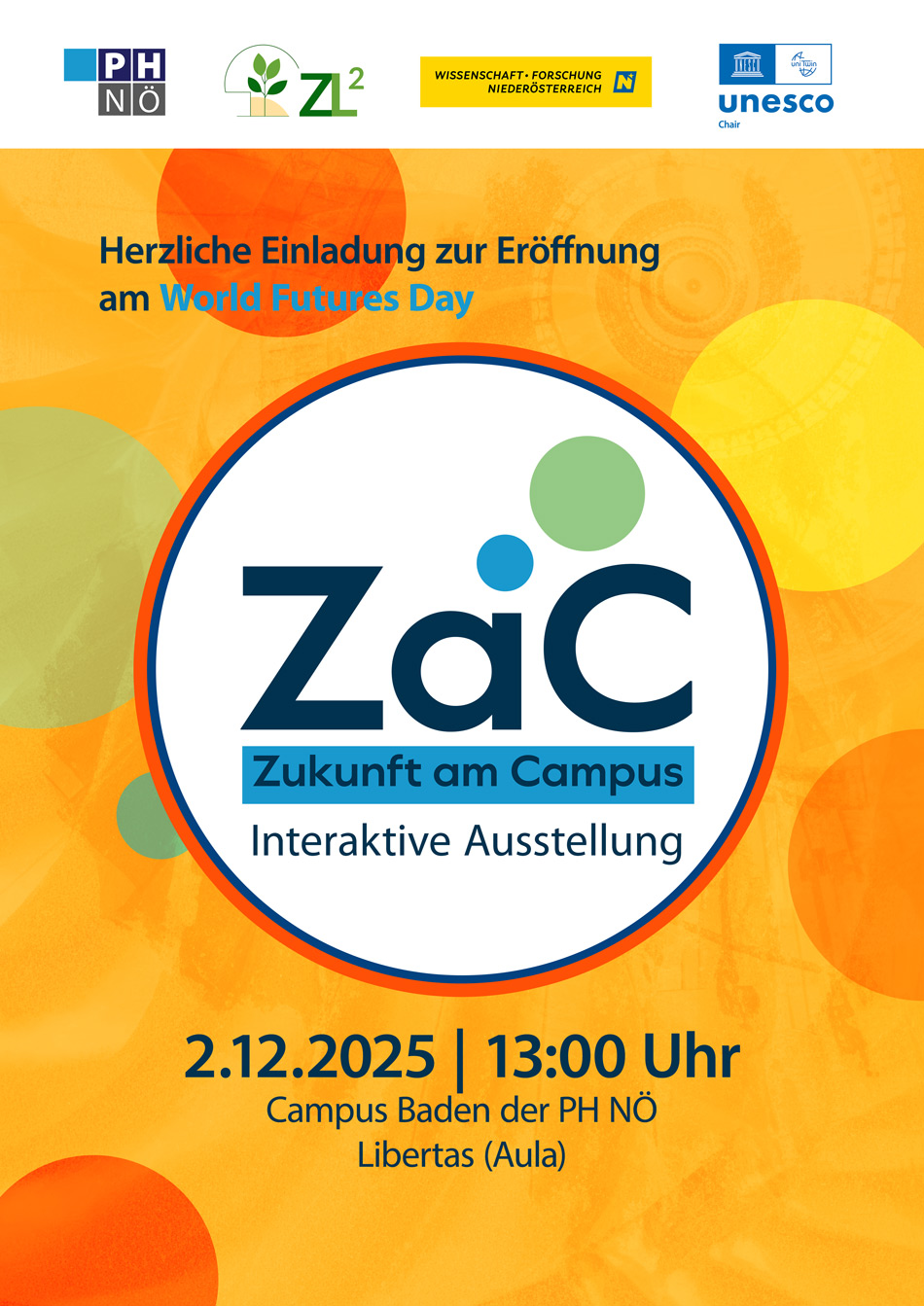
What is the future?
On 2 December 2025 – International World Futures Day – the first interactive ZaC exhibition will open: What is the future?
Five interactive stations invite visitors to think, explore, talk, and dream about the future in all its diversity:
- Curtain: What feelings does the word “future” evoke in you?
- Audio: What is the future?
- Image: What kind of future do you want?
- Points: What value does the future have?
- Postbox: What do you want for your personal future and for the future of the world?
ZaC-Stations
The exhibition consists of 5 interactive stations, plus an intro station and a feedback & reflection station.
Station 0: Introduction ZaC exhibition: „What is the future?“
This station explains the other 5 interactive stations and the ZaC game rules:
ZaC Game Rules: In the spirit of togetherness …
- the five ZaC interactive stations are best completed one after another (duration: approximately. 20 minutes), but you are welcome to try them individually whenever you have time;
- we treat all ZaC materials with care and leave them – including paper and pens – on site for the next future-thinkers;
- we mind respectful communication, both spoken and written;
- and we appreciate friendly feedback. Thank you for taking part!
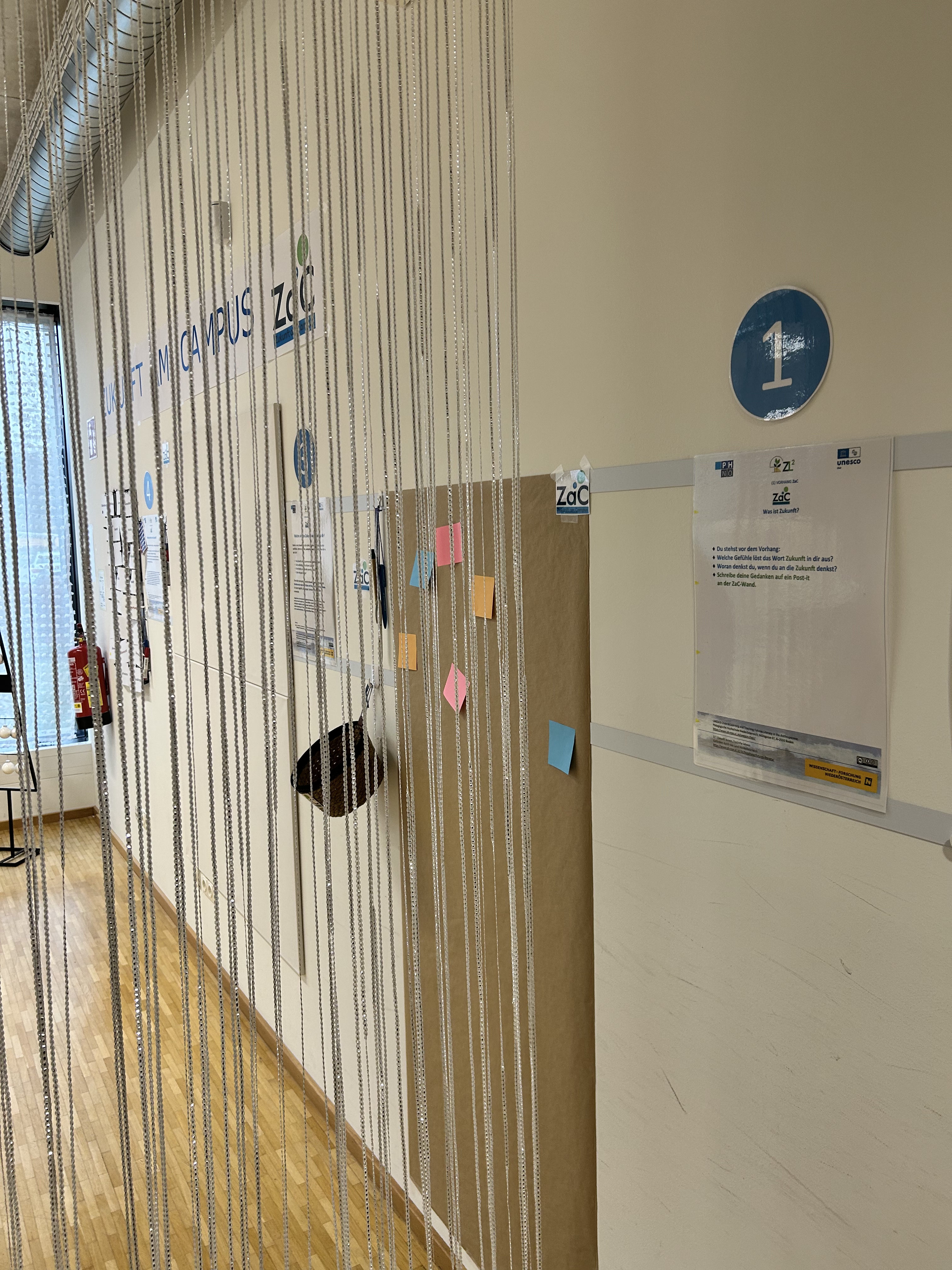
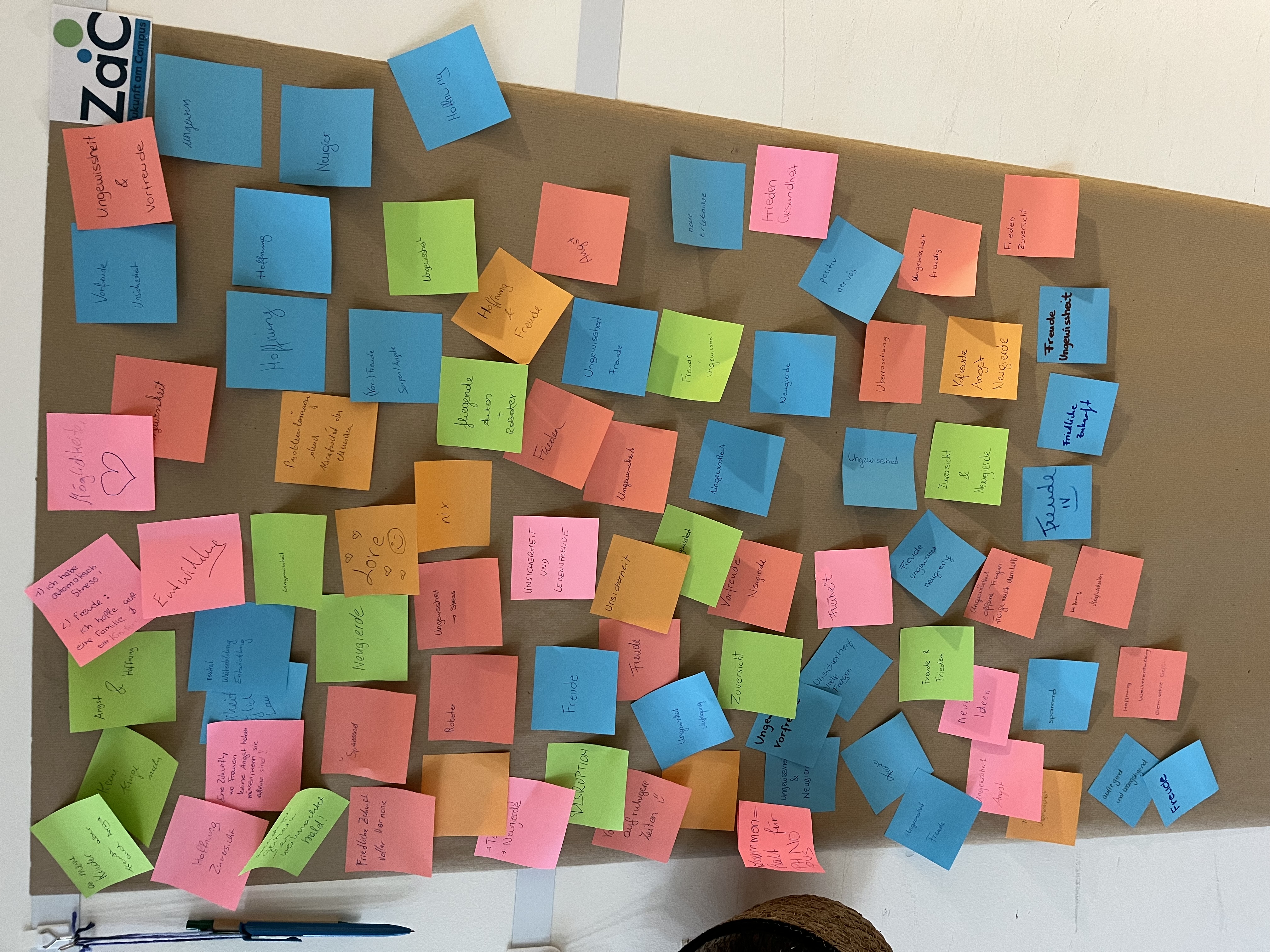
Station 1 – Curtain: What feelings does the word future evoke in you?
Upon entering the exhibition, visitors first stand in front of a curtain. Before passing through, they are invited to reflect on the following questions:
- What feelings does the word future evoke in you?
- What comes to mind when you think about the future?
Visitors write down their thoughts on a Post-it and place it on the ZaC wall. In this way, a first overview emerges of the personal associations visitors have with the future.
Station 2 – Audio: What is the future?
At this station, an audio recording on the topic “What is the future?” is available. Access is provided via the QR code. The audio is 5 minutes and 3 seconds long.
After listening, visitors are invited to record their impressions and ideas about the future in the Padlet. These may take the form of drawings, keywords, symbols, or short notes. The Padlet offers both a drawing function and the option to upload images or other visual elements.
The following guiding questions provide orientation:
What shape does the future have?
What color is it?
What does it smell like?
What does it feel like?
Contributions may be abstract or concrete and are meant to make individual visions of the future visible.
Here you can find the Padlet
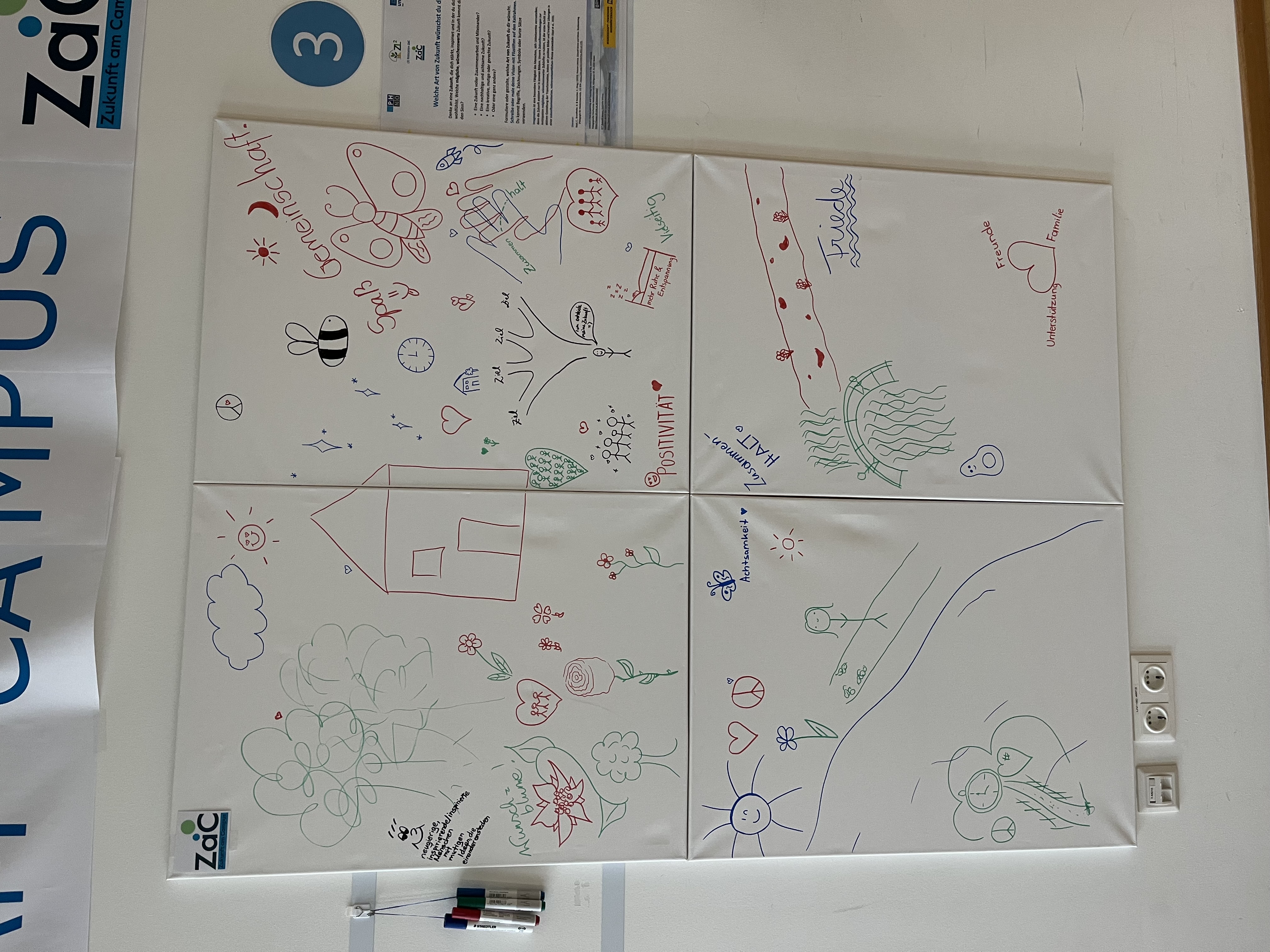
Station 3 – Image: What kind of future do you wish for?
At this station, the focus is on personal wishes for the future. Visitors are invited to reflect on the kind of future they envision—one that strengthens, inspires, and fosters a sense of well-being.
A variety of possible perspectives may serve as inspiration: a future shaped by collaboration and togetherness; a sustainable and mindful future; or a creative, courageous, or just future. Completely different ideas are also possible and explicitly encouraged.
These individual visions are then expressed on a canvas. Felt-tip pens are provided for this purpose. The artwork can take the form of words, symbols, drawings, or short sentences. The aim is to make personal ideas of a desirable future visible.
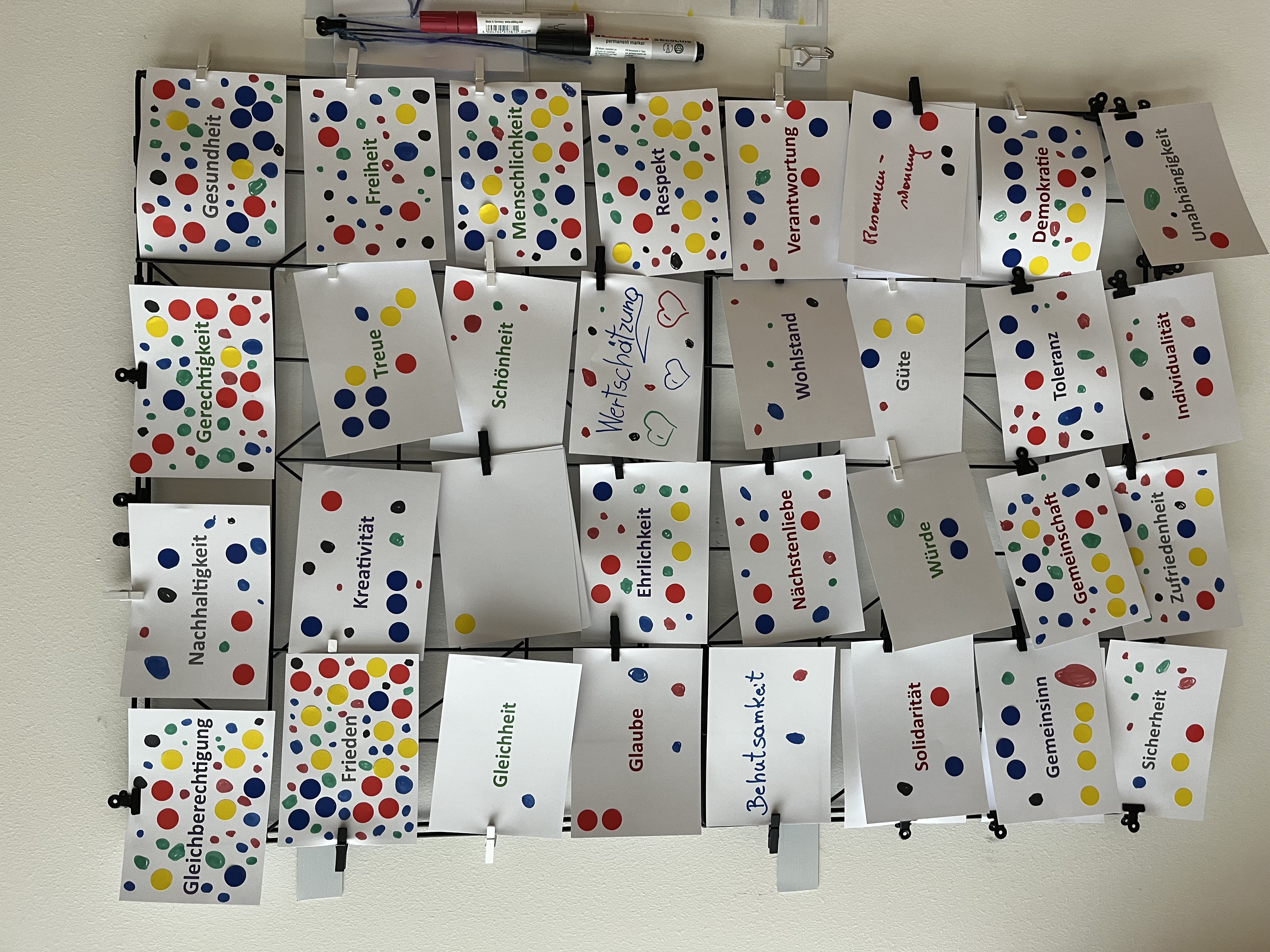
Station 4 – Dots: What is the value of the future?
This station focuses on the values that might be important for a good future for everyone. Visitors begin by reflecting on which values they personally consider meaningful.
A total of nine dots are available for allocation, and these should be distributed across at least three different values. The dots can be freely placed — either stuck or drawn — onto the prepared cards, depending on individual priorities.
If a personal value is missing from the provided selection, it can be added to a blank card and included in the collection. The goal is to make visible which values are seen as particularly important for shaping a successful future.
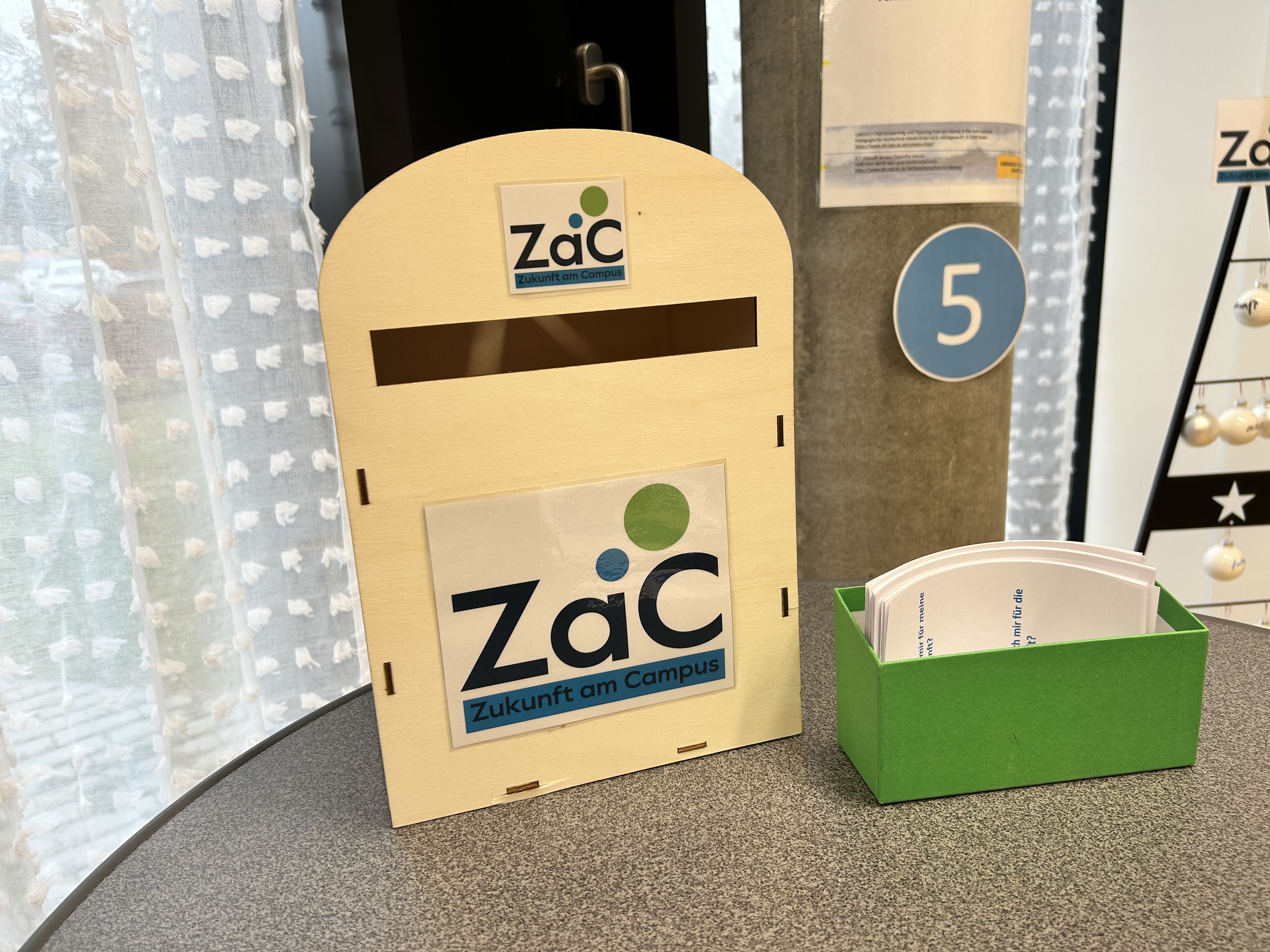
Station 5 – Mailbox: What do you wish for your personal future and for the future of the world?
At this station, individual wishes for the future take center stage—both on a personal level and regarding the future of the world. Visitors are invited to reflect on the hopes and concerns they hold for their own lives as well as for society as a whole.
These wishes are written down on a prepared card. Afterwards, the card is placed into the designated ZaC mailbox. In this way, a collective collection of personal and shared future wishes is created.
Station 6 – Feedback & Reflection:
At this station, visitors are invited to share their feedback on the exhibition. They can express their impressions, thoughts, and suggestions for improvement. The feedback helps further develop the exhibition and improve future iterations.
Research
What potential does the interactive exhibition format ‘Future on Campus (ZaC)’ have for implementing futures literacy in teacher education?
Interactive exhibitions are considered informal learning spaces where ‘predominantly passive observers become self-directed explorers of the exhibition objects’ (Moser & Lewalter, 2021, p. 131, translated from German). This research project investigates the extent to which the interactive exhibition format ‘Future on Campus (ZaC)’ can contribute to implementing futures literacy in teacher education. In this sense, ZaC serves as a real-world laboratory in which visitors participate in the development of the interactive exhibition format. ZaC represents a method in futures literacy pedagogy that is being developed at the UNESCO Chair in Learning and Teaching Futures Literacy in the Anthropocene at the PH NOE (Sippl, 2025).
The research design of the research project ‘Future on Campus (ZaC)’ combines Arts-Based Research (ABR; Leavy, 2021) with Educational Design Research (EDR; McKenney & Reeves, 2019). While ABR carries the artistic-aesthetic dimension of the project―especially in the design of interactive exhibition stations that open up imaginative, narrative and performative forms of expression―EDR ensures the systematic, cyclical research and development process through which the format is iteratively tested, reflected upon and improved.
Duration: 1 October 2025–30 September 2028
Literature
Assmann, A. (2022). Doing Future – ökologische und kulturelle Nachhaltigkeit. In C. Sippl & E. Rauscher (Hrsg.), Kulturelle Nachhaltigkeit lernen und lehren (S. 677–683). Studienverlag. (Pädagogik für Niederösterreich, 11) DOI: https://doi.org/10.53349/oa.2022.a2.110
Leavy, P. (2021). Method Meets Art: Arts-Based Research Practice. Third Edition. Guilford Press.
McKenney, S. & Reeves, T. C. (2019). Conducting educational design research (2nd ed.). Routledge. https://doi.org/10.4324/9781315105642
Moser, S. & Lewalter, D. (2021). Informelles Lernen und digitale Medien. In T. Schmohl & Th. Philipp (Hrsg.), Handbuch Transdisziplinäre Didaktik (S. 129–139). Transcript. (Hochschulbildung: Lehre und Forschung, 1) DOI: https://doi.org/10.14361/9783839455654
Sippl, C. (2025). The Futures Stories Lab. A Tool for Futures Literacy Pedagogy. R&E-Source 12, 4, 78–92. DOI: https://doi.org/10.53349/re-source.2025.i4.a1485