Brotkrümelnavigation:
Main content:
Project Overview: ZL²
"Learning Future, Teaching Futures" (ZL²)

UNESCO views futures literacy as a key competence of the 21st century—the ability to understand changes, particularly in the context of climate change, and respond to them in a solution-oriented manner. Futures literacy requires imagination: while we cannot know the future, we can envision it and create a livable future for everyone in the present.
- Suggestions for pedagogy and beyond are offered in the anthology and video contributions from the reflection workshop.
- The Sparkling Science project "'Es wird einmal …' Wertstoffgeschichten erzählen für Zukünfte im Anthropozän" is dedicated to researching futures literacy.
- The research and development project "Learning future, teaching futures" (ZL2) translates futures literacy into the language of schools.
The Center for Futures⋅Literacy at the University College of Teacher Education Lower Austria and the UNESCO Chair "Futures Literacy – Learning and Teaching Futures Literacy in the Anthropocene" initiate and support this and other projects focused on cultural sustainability, science communication, and futures literacy.
"If not schools, then who? Future competence is the educational responsibility in the Anthropocene: Those who share responsibility for the future must have knowledge of the past. It is our pedagogical duty to counter the environmental skeptics and the Cassandras of our society with trust in the attainability of the good and to convey shared responsibility for societal change in the classroom. Learning means learning to take responsibility. Teaching means translating science into human language and enabling cultural optimism." – Erwin Rauscher, Rector of the University of Teacher Education Lower Austria
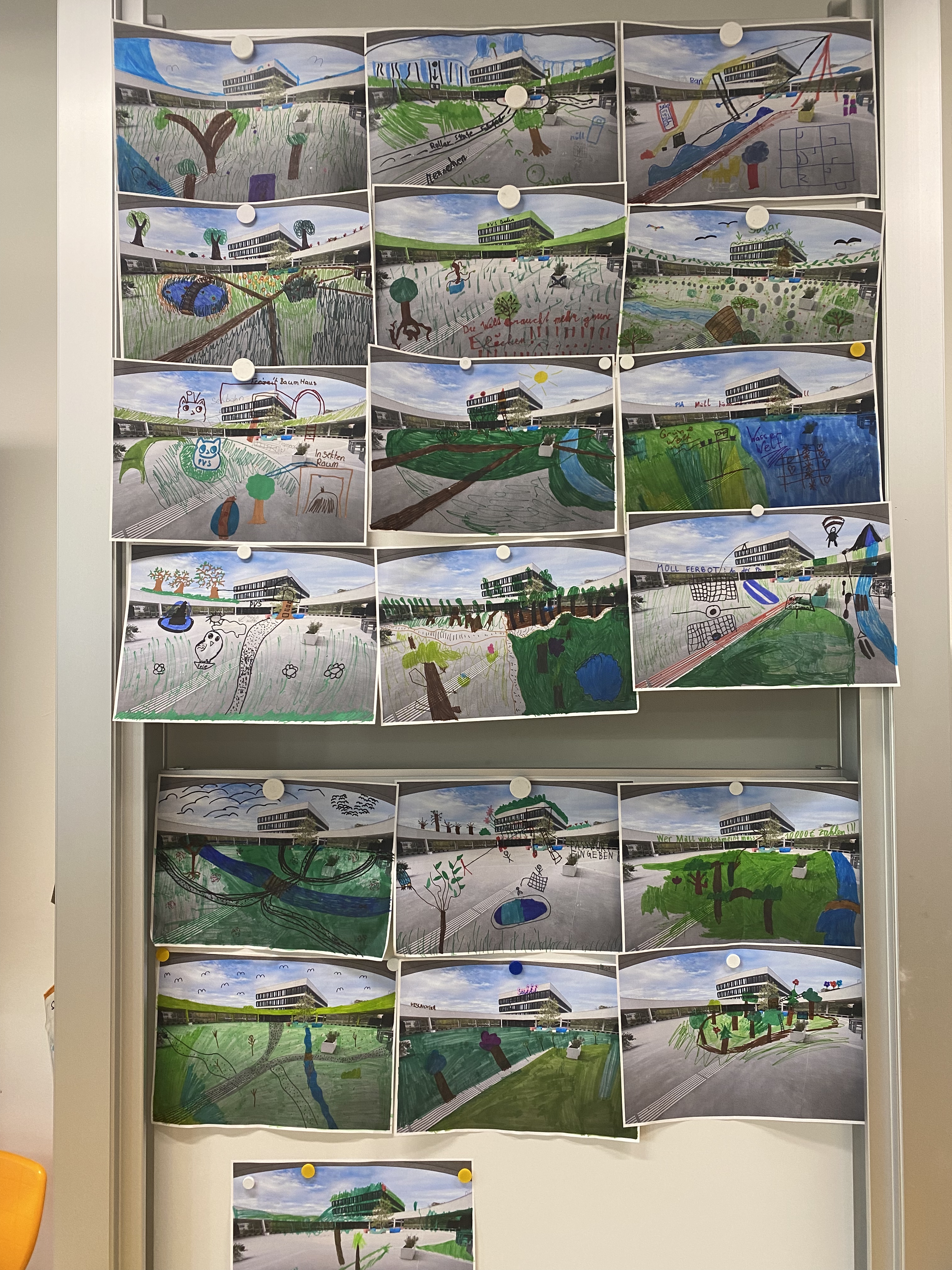
Protoype Development: Findings from the Pilot Study
In the first year of the project “Learning the Future, Teaching Futures” (ZL²), the focus is on developing an initial prototype of a didactic format for fostering futures thinking among children and young people, as well as developing the corresponding didactic concept.
For this purpose, the concept of the Futures Workshop, based on Jungk’s approach, was implemented on the topic of “soil” in two fourth-grade classes in cooperation with the University College of Teacher Education Lower Austria’s Practice Primary School. Learners’ artefacts, photographs, recordings, observation protocols completed by the participating researchers, and interviews with the teachers were collected and used for the analysis.
Initial findings from the prototype phase indicate that the Futures Workshop is a valuable approach for fostering futures thinking, including among primary school pupils.
Futures Stories Lab on the spa town of the future
In the second year of the project, another round of material development and evaluation took place. The team of the UNESCO Chair in Learning and Teaching Futures Literacy in the Anthropocene tested the methodological format at the Lower Secondary Practice School of the University College of Teacher Education Lower Austria in Baden. Supported by their teachers Claudia Adorjan, Magdalena Fliedl, and Petra Festi, lower secondary students explored Baden as a spa town and as part of the “Great Spa Towns of Europe” UNESCO World Heritage Site. They developed and presented models illustrating how the spa town of the future could become a liveable and safe home. The research team gained valuable insights into the structural conditions and methodological approaches needed for futures education. These findings contribute to the further development of the didactic approach at the UNESCO Chair as part of the project “Learning the Future, Teaching Futures” (ZL²).

The research and development project "Learning Futures, Teaching Futures" is funded by the State of Lower Austria, Department of Science and Research. Project duration: October 1, 2024 – September 30, 2027.